



━━━━ WELDING FUME EXTRACTION · EQUIPMENT COMPARISON
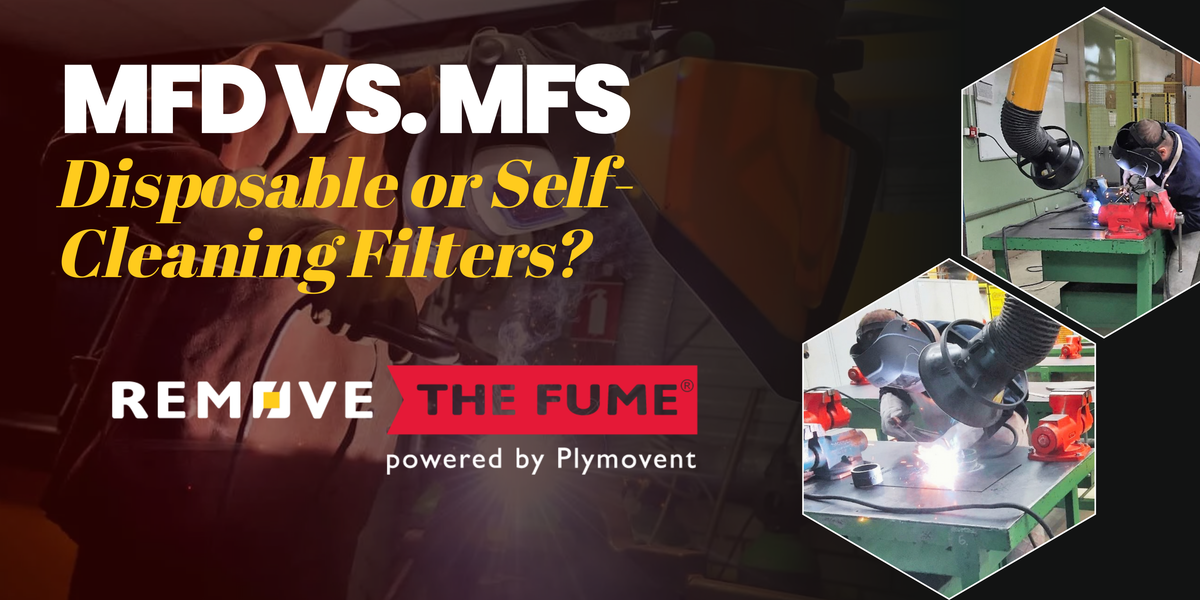
MFD vs. MFS: Disposable or Self-Cleaning Filters?
Two capable mobile extraction systems. Different filtration workflows. Here is how to decide which one makes sense for your shop.
Mobile Fume Extraction
Disposable vs. Self-Cleaning
November 2026
A mobile fume extractor is not one-size-fits-all equipment. Two facilities might weld the same materials but have very different production schedules, staffing levels and maintenance routines. The right choice depends on more than the price of the machine.
The Plymovent MFD uses disposable filtration. The Plymovent MFS features a self-cleaning filter system designed for more intensive welding activity. Both bring source capture near the work, but they create different ongoing service needs.
The short answer. If your welding schedule is moderate and planned filter replacement fits your maintenance routine, start by evaluating the MFD. If welding is more intensive and frequent filter servicing could disrupt operations, consider the MFS. Final selection should account for the actual application, filter specification and total operating costs.
MFD and MFS at a Glance
These are the practical differences to evaluate before requesting a quote or choosing a configuration.
| What to Compare | MFD | MFS |
|---|---|---|
| Filtration | Disposable filter | Self-cleaning cartridge |
| Ideal Workload | Predictable, less intensive welding | More intensive, recurring welding |
| Maintenance | Scheduled filter replacements | Cleaning-system care and filter service |
| Extraction Arm | UltraFlex options | UltraFlex options |
| Buying Priority | Filter cost and replacement frequency | Cleaning requirements and downtime |
| Also Consider | Materials, process and capture performance | Materials, process and capture performance |
Where the MFD Makes Sense
Picture a fabrication shop with a predictable schedule. A welder uses extraction near one bench, then moves the unit to another task. The team wants dependable source capture and is comfortable inspecting and replacing filters as part of planned maintenance.
That is the type of workflow in which the MFD deserves consideration. Its filtration process is straightforward: monitor the system, follow the service instructions and replace filter consumables when required. There is no expectation that the filter cleans itself between jobs.
The trade-off is that the shop needs to stock suitable replacement filters, schedule maintenance, and handle used filters according to the contaminants collected and applicable requirements. Actual filter life can vary considerably by process and workload.
Buying insight. A lower purchase price does not automatically mean a lower cost over several years. Ask how often filters are likely to need replacement under your real welding conditions, and what each service event requires.
Where the MFS Becomes Attractive
Now consider a busier shop with longer welding runs or greater particulate loading. If filter changes frequently interrupt production or tie up maintenance staff, a self-cleaning system may be more attractive.
The MFS is designed for intensive dry welding activity. Its self-cleaning filtration is intended to help manage collected particulate, making it worth evaluating when consistency and maintenance interruptions matter. The appropriate configuration still depends on the work and contaminants involved.
Self-cleaning does not mean maintenance-free. The cleaning mechanism, dust collection, electrical and utility requirements, and the filter cartridge all need to be considered. Confirm the specific setup and service needs with Remove The Fume before purchase.
Important distinction. Filtration technology is only part of the solution. An extractor with the wrong filter type or poorly positioned extraction hood may not provide the needed control, regardless of whether its filter is disposable or self-cleaning.
Four Questions to Answer Before You Buy
01. How much welding happens each week?
Document the process, approximate welding hours, consumable use, number of operators and the time the machine must run. A repair station used occasionally has different demands than a busy production cell.
02. Which metals and coatings are involved?
Stainless steel, coated metals, fillers and welding methods can change the contaminant profile. Confirm the correct filter and exposure controls for your actual work, especially where higher-efficiency filtration may be needed.
03. Who is responsible for maintenance?
Consider who checks the machine, replaces consumables, maintains the cleaning system and disposes of captured material. A predictable service schedule may favor replaceable filters; frequent interruptions may support a self-cleaning approach.
04. Is the hood positioned to capture fumes at the source?
Arm reach, hood placement, airflow and cross-drafts can all affect performance. Assess the workstation and operator habits, not just the filter technology or model name.
Compare Total Cost, Not Just the Quote
A practical ownership comparison should include the purchase price, the arm configuration, filter packs or cartridges, any cleaning utilities, maintenance labor, spare parts and potential downtime. For many shops, those operating details matter more than the difference between two initial price tags.
- Equipment and appropriate extraction arm
- Filter replacement or cleaning-system service
- Maintenance time and parts availability
- Shop utility needs and dust handling
- Production impact during service
What Both Systems Still Need
Both MFD and MFS are source-capture options. They are not substitutes for evaluating welding hazards, ventilation design and worker exposure. OSHA guidance emphasizes placing local exhaust hoods as close as practicable to the operation and using sufficient capacity to remove fumes at the source.
In practice, a buyer should verify the arm can reach the work comfortably, the hood can be positioned correctly, and the selected filter is appropriate for the contaminants. Where welding includes stainless steel or particular coatings, discuss the application and any high-efficiency filtration requirements with a qualified specialist.
Source: OSHA guidance on welding ventilation and local exhaust systems
Frequently Asked Questions
Is the MFS automatically better than the MFD?
No. The best choice depends on the production volume, materials, filter requirements, maintenance routine and the expected cost of running the system.
Does self-cleaning filtration eliminate filter maintenance?
No. Self-cleaning can help manage collected material, but inspections, dust handling and service remain necessary. Follow the instructions for the exact configuration.
Can I use either unit for stainless steel welding?
Potentially, with the appropriate filtration and application review. Stainless steel can present specific airborne contaminant hazards. Confirm suitability and filter specifications before ordering.
How can I estimate filter replacement costs?
Provide your welding hours, processes and consumable usage to the supplier, then request the expected service approach and relevant consumable pricing. Treat any replacement interval as application-dependent.
What information should I send when requesting a recommendation?
Share your welding process, base metals, coating or filler details, weekly welding hours, number of stations, available floor space and maintenance preferences.
Related Reading
- Guide to Welding Fume Extraction Systems
- Checklist: Fume Extractor Filters
- High-Efficiency Filters for Stainless Steel Welding
Need Help Choosing Between MFD and MFS?
Tell us about your welding process, weekly workload and shop layout. Our team can help you narrow down the options for your application.
FIND THE RIGHT SYSTEM


