



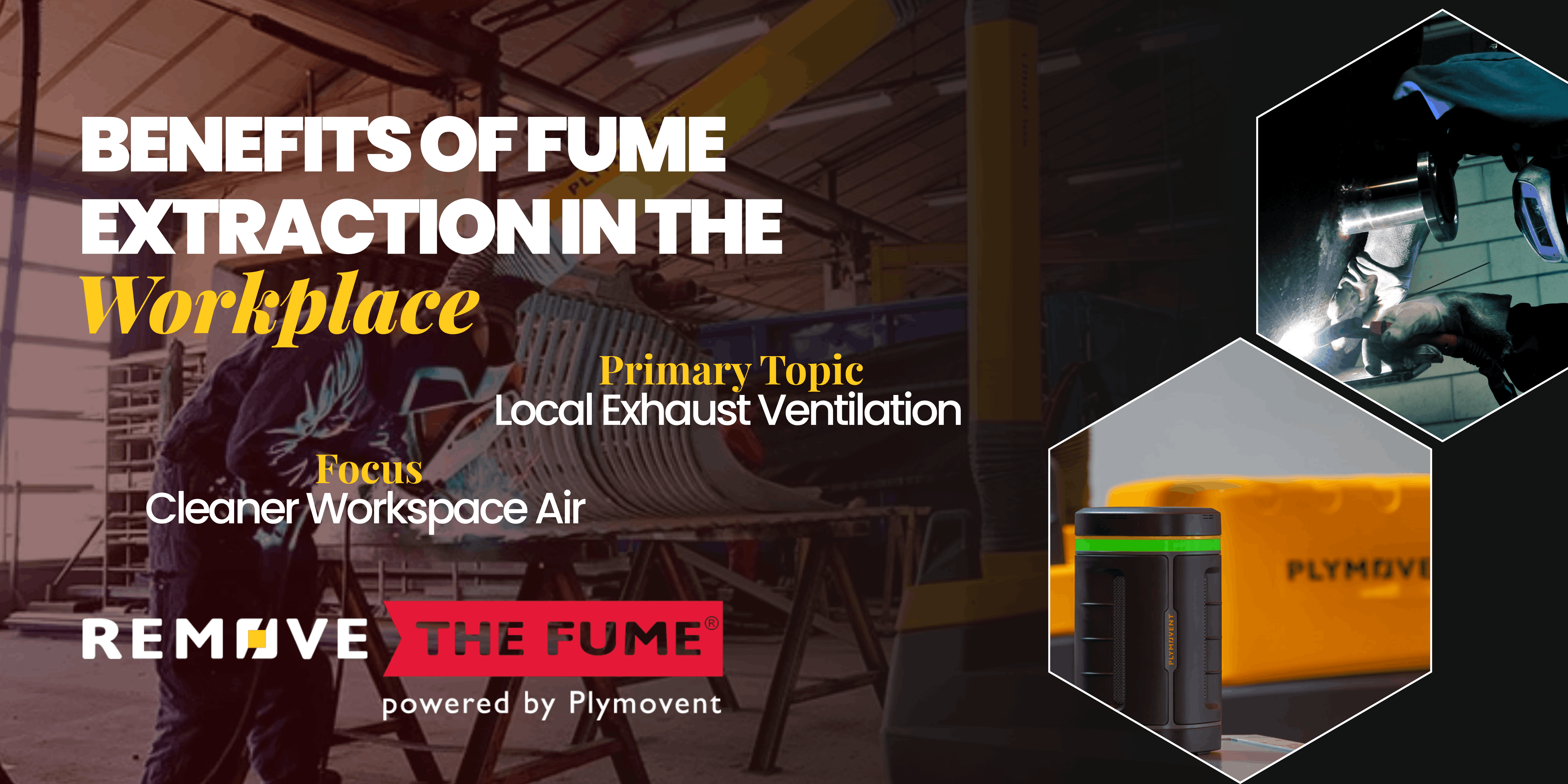
Benefits of Fume Extraction in the Workplace
What Are the Benefits of Fume Extraction?
Welding fumes are created when metals are heated to extremely high temperatures. The resulting airborne mixture can contain metal particles, metal oxides and gases that may present health hazards when inhaled.
Fume extraction is designed to control these contaminants as close as practical to where they are generated. For many welding applications, this means using local exhaust ventilation to capture the fume plume near the source.
Six Reasons to Control Welding Fume
The value of fume extraction goes beyond removing visible smoke. A well-designed system can contribute to several areas of workplace health, safety and operation.
Capturing fumes close to the welding source can reduce the amount of contaminated air reaching the welder's breathing zone.
Removing contaminants before they disperse can help improve overall air quality within the welding environment.
Source capture helps limit the opportunity for welding fumes to travel into surrounding work areas.
Proper engineering controls can form an important part of managing occupational exposure to welding contaminants.
Capturing airborne particulate can help reduce the amount of fume and dust that settles throughout the surrounding workspace.
Extraction systems can be selected around the welding process, facility layout and intensity of use.
Benefit 1: Reduce Exposure to Welding Fumes
Welding fumes can contain a complex mixture of metals and other chemical species. The composition varies depending on the welding process, base metal, electrode, wire, coatings and other materials involved.
NIOSH identifies potential health effects associated with welding exposure including metal fume fever, respiratory disease and neurological effects associated with certain contaminants such as manganese.
Reducing the amount of welding fume that enters a worker's breathing zone is one of the main reasons facilities use engineering controls such as local exhaust ventilation.
Source: NIOSH Criteria for Welding, Brazing and Thermal Cutting
Benefit 2: Capture Fume Before It Spreads
Welding fumes do not always remain directly above the welding arc. Once released into a shop, contaminated air can move into surrounding work areas and potentially expose employees who are not performing the welding themselves.
Local exhaust ventilation is designed to capture the contaminated air near the welding operation before it has the opportunity to spread throughout the facility.
Fume Can Disperse
Airborne contaminants may move away from the welding station and mix with the surrounding workplace air.
Fume Is Collected Near the Weld
An extraction arm, hood, downdraft table or other capture device draws contaminated air away from the worker and into the extraction system.
Does Local Exhaust Ventilation Actually Reduce Welding Fume?
NIOSH has evaluated portable local exhaust ventilation systems used during welding operations. In one evaluation, total welding fume concentrations without local exhaust ventilation ranged from 2 to 60 mg/m³ of air.
With ventilation in use, measured concentrations in that evaluation ranged from 3 to 13 mg/m³. Actual performance varies by welding process, hood position, airflow, facility conditions and system design.
Source: NIOSH Engineering Controls Database: Welding Operations and Local Exhaust Ventilation
Benefit 3: Support Workplace Safety Requirements
Employers need to evaluate the contaminants generated by their welding processes and control employee exposure according to the applicable occupational health and safety requirements.
Fume extraction is one engineering control that can help facilities manage airborne contaminants. Depending on the process and exposure level, additional ventilation, work practices, monitoring and respiratory protection may also be required.
Benefit 4: Reduce the Spread of Airborne Particulate
Welding fume is an aerosol made up of extremely small airborne particles. When those particles are not captured, some can remain suspended while others eventually settle onto nearby surfaces.
Source capture can help reduce the amount of particulate released into the wider workplace. That can contribute to cleaner welding areas and reduce unnecessary distribution of contaminants beyond the immediate operation.
Learn more: NIOSH Aerosols in the Workplace
Benefit 5: Fume Extraction Can Be Matched to the Application
One major advantage of modern fume extraction is that facilities are not limited to one type of system. The appropriate solution can be selected according to the welding process, number of welders, workstation layout and operating hours.
| System Type | Best Suited For | Main Advantage |
|---|---|---|
| Mobile Extractor | Changing welding locations | Can be moved between work areas |
| Stationary Extractor | Permanent welding stations | Dedicated extraction for fixed work areas |
| Extraction Arm | Source capture close to the welding arc | Flexible positioning near the fume plume |
| Downdraft Table | Welding and grinding at a work surface | Captures contaminants through the work area |
Choosing the Right Fume Extraction System
The best system depends on how your facility actually welds. A small fabrication shop with occasional welding may have very different extraction needs from a production facility operating several welding stations throughout the day.
Consider:
- Number of welding stations
- Hours of welding per day
- Welding process
- Metals and coatings being welded
- Whether workstations are fixed or mobile
- Available floor and wall space
- Amount of fume generated
Cleaner Air in an Active Welding Shop
In a 2026 Remove The Fume case study, Skeer System in Quebec installed two Plymovent FlexHood welding fume extraction units after operating without a dedicated capture system.
The project was designed to improve fume capture and overall air quality in an active welding environment. Following installation, the facility reported immediate and measurable improvements to the working environment.
Does Fume Extraction Benefit the Employer Too?
Yes, although the strongest benefits are tied to risk management and working conditions rather than guaranteed claims about productivity or insurance savings.
A properly designed extraction system can help a business create a cleaner working environment, manage employee exposure, support occupational safety programs and demonstrate that airborne contaminants are being addressed through engineering controls.
A Cleaner Welding Environment
Controlling fume at the source can help reduce exposure for welders and employees working nearby.
A More Structured Approach to Risk
Engineering controls can form an important part of an employer's overall workplace health and safety strategy.
Fume Extraction Questions
The main benefit is reducing the amount of welding fume that reaches workers. Local exhaust ventilation captures contaminated air close to the welding source before it can spread.
Properly designed extraction can reduce airborne welding fume concentrations and help prevent contaminants from spreading throughout the workplace. Actual performance depends on the system, airflow, positioning and welding process.
Not always. General ventilation can help manage room air, but local exhaust ventilation may be needed to capture fumes close to the welding source before they enter the breathing zone.
The appropriate system depends on the welding process, hours of use, number of welders and whether the workstation is fixed or changes location. Mobile, stationary, extraction arm and downdraft solutions serve different applications.
Not automatically. A fume extractor is one possible engineering control. Compliance depends on actual exposure levels, contaminants, regulations and whether the overall control strategy is adequate.
Fume Extraction Is an Investment in Cleaner Air
Welding fume is a workplace hazard that can be controlled. Capturing contaminants close to their source can reduce worker exposure and limit the spread of fume throughout a facility.
The most effective system is the one designed around the actual welding process, working environment and level of use.
Ready to Improve Air Quality in Your Welding Facility?
Compare mobile, stationary, extraction arm and downdraft solutions, or let Remove The Fume help identify the right system for your application.
Contact us →


