


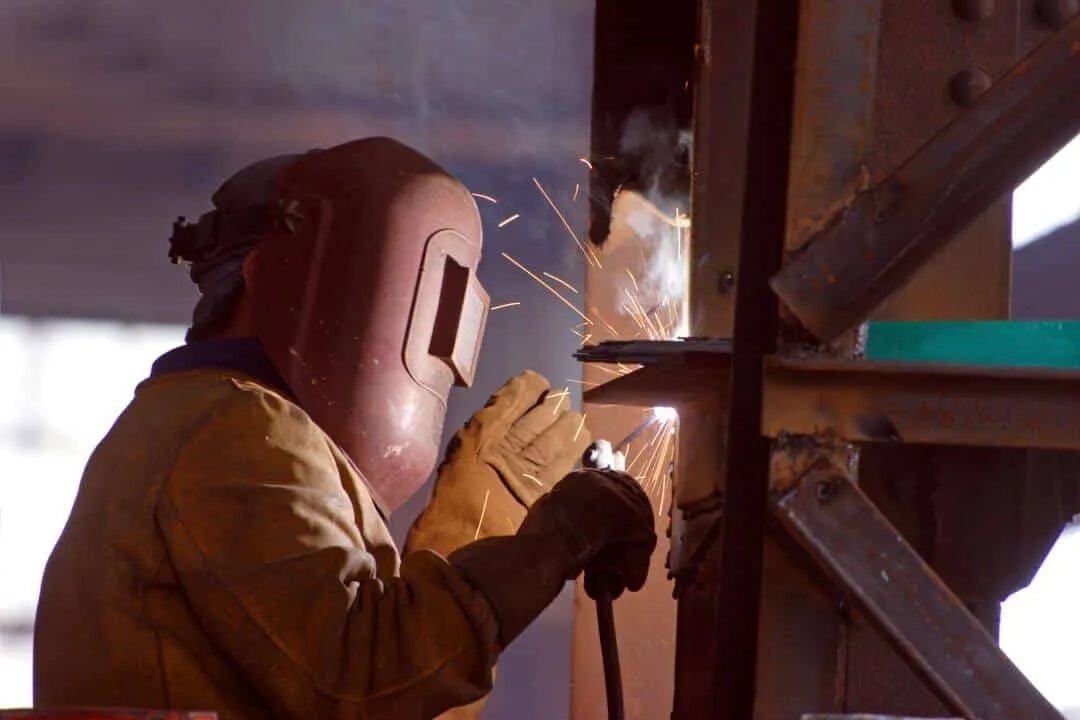
Protect Your Employees, Protect Your Business
How Do Welding Fumes Affect Your Business?
Welding is essential to fabrication, manufacturing, transportation, construction and heavy industry. The fumes generated by welding, however, can create occupational health risks when they are not adequately controlled.
Welding fumes are classified by the International Agency for Research on Cancer as carcinogenic to humans. Exposure can also contribute to short-term effects such as metal fume fever and respiratory irritation, as well as longer-term respiratory and neurological concerns.
Those health risks also create business risks. When employees become ill, operations can be disrupted, labor availability can be affected, and employers may face additional costs related to medical care, workers' compensation, investigations, regulatory issues and replacement labor.
Employee Safety and Business Performance Are Connected
The consequences of an occupational illness rarely stop with one employee. A worker who is unable to perform normal duties can affect scheduling, production, staffing and the workload placed on the rest of the team.
Welding fume exposure can contribute to short-term and long-term occupational health problems.
Illness and absence can affect staffing, scheduling and production capacity.
Employers are responsible for managing employee exposure to hazardous airborne contaminants.
Workplace injuries and illnesses can create medical, compensation, legal and productivity costs.
Visible investment in employee safety can reinforce the importance of safe operating practices.
How a company manages employee safety can influence how workers, customers and partners view the organization.
Start With the Health Risk
Welding fumes can contain metal particles and gases generated by the welding process. The exact composition varies based on the welding method, base material, filler metal, coatings and workplace conditions.
Exposure can contribute to acute effects such as respiratory irritation and metal fume fever. Certain contaminants can also create longer-term health concerns.
Welding fumes themselves are classified by IARC as Group 1, carcinogenic to humans. This reinforces the need to treat welding fume control as a long-term occupational health issue, not simply a housekeeping concern.
Learn more in Welding Fume Health Hazards .
Workplace Illness Has a Financial Cost
Occupational injuries and illnesses can generate costs far beyond the initial medical treatment.
A landmark U.S. economic analysis estimated the medical and indirect cost of occupational injuries and illnesses at approximately $250 billion for 2007.
Of that estimate, approximately $67 billion represented medical costs and about $183 billion represented indirect costs.
Indirect costs can include lost productivity and other economic effects that extend beyond the immediate injury or illness.
The $250 billion figure is a national societal estimate based on 2007 data. It should not be presented as a current annual amount paid directly by U.S. employers.
Source: Economic Burden of Occupational Injury and Illness in the United States
Safety Programs Can Reduce Avoidable Business Costs
OSHA recognizes a business case for effective workplace safety and health programs. Injuries and illnesses can create costs associated with workers' compensation, medical expenses and lost productivity.
OSHA also notes that improvements made to strengthen workplace safety can sometimes produce wider operational and productivity benefits.
Costs a Business Can See
- Workers' compensation
- Medical expenses
- Investigation costs
- Replacement labor
- Lost work time
Costs That Can Spread
- Production disruption
- Schedule changes
- Training replacement workers
- Reduced staffing flexibility
- Management time
What Does OSHA Require for Welding Fumes?
OSHA's welding standard requires employers to control hazardous fumes, gases and dusts generated during welding operations.
Under 29 CFR 1910.252, local exhaust or general ventilation systems must be arranged to keep toxic fumes, gases and dust below applicable exposure limits.
OSHA also identifies specific welding conditions where mechanical ventilation or local exhaust is required, including certain confined spaces, smaller work areas and operations involving particular hazardous metals.
Installing a fume extractor does not automatically make a workplace compliant. The controls must adequately address the contaminants, exposure levels, welding process and applicable occupational safety requirements.
Source: OSHA 29 CFR 1910.252
Why Capture Welding Fume at the Source?
Local exhaust ventilation is designed to capture contaminated air close to where welding fumes are generated.
The objective is to reduce the opportunity for the fume plume to enter the welder's breathing zone or spread into surrounding areas.
OSHA specifically describes movable local exhaust hoods positioned as near as practical to the work and sized to provide sufficient airflow for fume control.
NIOSH also recommends reducing welding emissions through engineering controls and safe work practices.
Can Workplace Safety Affect Customer Experience?
There is evidence that workplace safety can have effects beyond the employees directly involved.
A study published in the Journal of Safety Research examined 821 employees across 20 work groups at a U.S. electric utility company, together with customer satisfaction data.
Work groups with more recorded employee injuries had customers who were less satisfied with the service they received.
The researchers described the findings as preliminary evidence that workplace safety may create spillover effects into the customer experience.
Research: Does Employee Safety Influence Customer Satisfaction?
Fume Control Is a Risk Management Decision
| Business Factor | Without Effective Fume Control | With Appropriate Fume Control |
|---|---|---|
| Worker exposure | Greater potential for uncontrolled exposure | Exposure can be reduced through appropriate controls |
| Air quality | Fume can disperse throughout the work area | Contaminants can be captured closer to their source |
| Compliance | Greater risk that exposure limits are not adequately controlled | Engineering controls can support the exposure control strategy |
| Operational disruption | Occupational illness can contribute to lost work time | Risk reduction supports a healthier working environment |
| Workplace cleanliness | More particulate can disperse and settle around the facility | Source capture can reduce fume migration |
| Safety program | Airborne hazards may remain insufficiently controlled | Extraction can form part of a structured engineering control strategy |
Match the Extraction System to the Operation
There is no single fume extraction system for every welding facility. The correct solution depends on the amount of welding, the type of work and the layout of the operation.
Consider:
- Number of welders
- Welding hours per shift
- Welding process
- Materials and coatings being welded
- Whether workstations are fixed or mobile
- Facility size and layout
- Available space
- Required airflow and filtration
Build the Business Case for Cleaner Air
Welding Fume Business Questions
Uncontrolled welding fumes can create worker health risks and may contribute to lost work time, operational disruption, workers' compensation costs and regulatory exposure. Effective controls can help reduce those risks.
A major U.S. economic study estimated the medical and indirect societal cost of occupational injuries and illnesses at approximately $250 billion in 2007. This figure is a national societal estimate, not a current annual employer-only cost.
OSHA requires employers to control hazardous welding fumes, gases and dust below applicable exposure limits. Local exhaust or mechanical ventilation is specifically required in certain welding conditions and for certain materials. The exact requirement depends on the application.
Research suggests there can be a connection. In one study of a U.S. electric utility, work groups with more employee injuries had lower customer satisfaction. The researchers described the findings as preliminary evidence of safety-related spillover effects.
Local exhaust ventilation can capture welding fumes close to the point where they are generated. The complete control strategy may also include general ventilation, work practices, exposure monitoring and respiratory protection where required.
Protecting Workers Protects the Operation
Welding fume control begins as a worker health issue, but its effects can extend throughout the business.
Reducing unnecessary exposure can support safer working conditions, strengthen occupational risk management and help prevent avoidable disruption.
The goal is not simply to install equipment. It is to select and use the right control system for the actual welding environment.
Protect Your Employees. Protect Your Business.
From occasional welding to high-volume industrial production, Remove The Fume can help identify an extraction solution suited to your operation.
Find the Right System →


